When it comes to quartz vs granite, which material will prevail. We compare the differences to see which creates a superior kitchen surface.
If you're deciding between quartz and granite for your new kitchen countertop, there are a few important factors to consider.
Quartz and Granite have very comparable advantages for kitchen surfaces, but as much as they share, it's worth comparing these two materials for durability, heat resistance, and ease of cleaning, as well as cost and aesthetics.
In this brief overview, we look into the features of both Quartz and Granite, grading how they perform on these essential criteria.
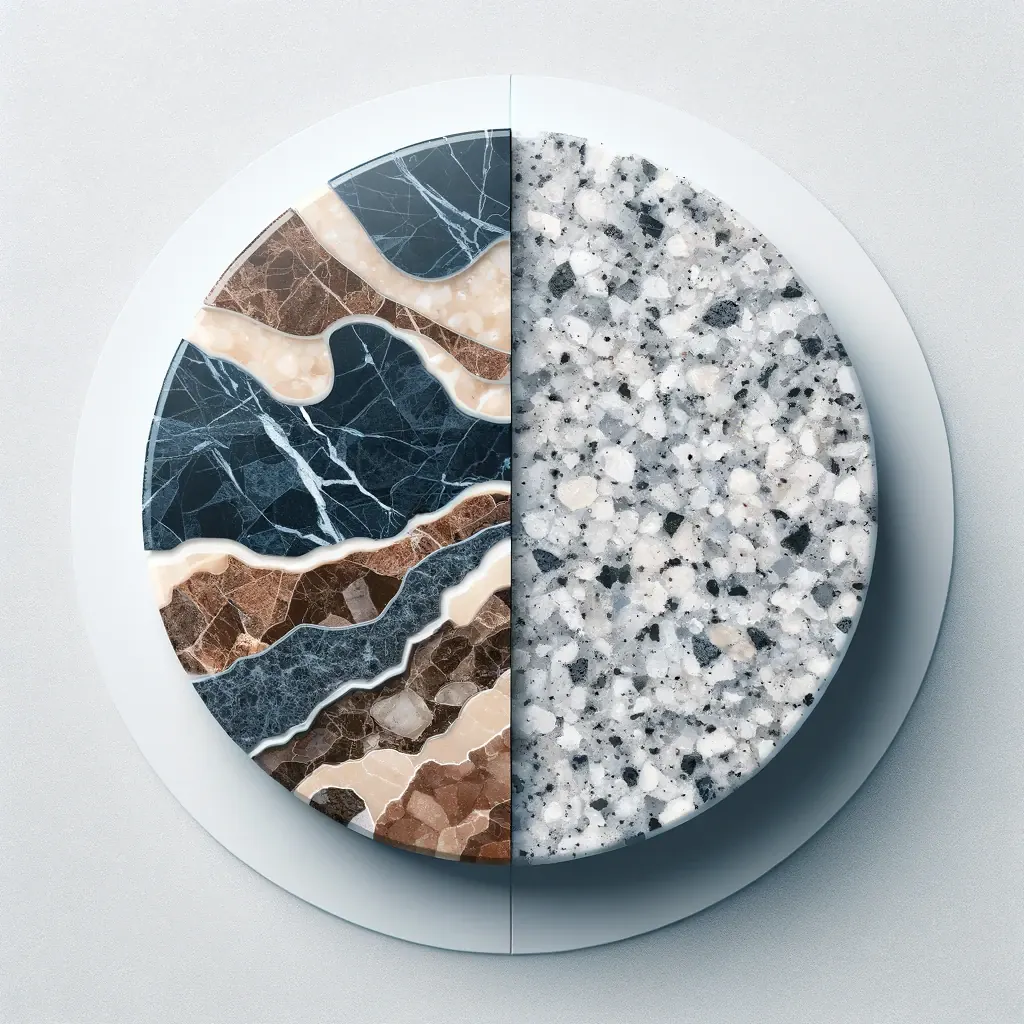
What's the Difference Between Quartz and Granite?
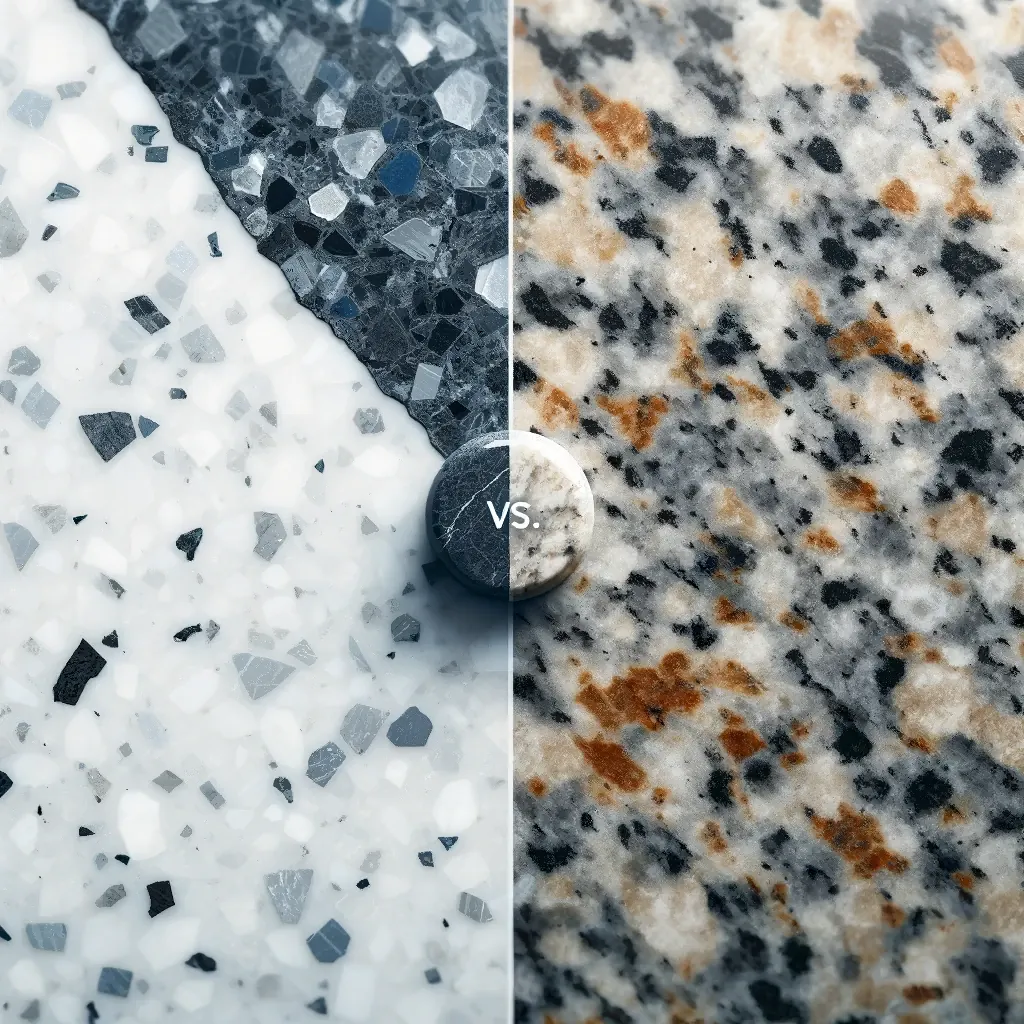
While they may appear to be similar, the primary difference between quartz and granite is their formation.
Granite is an igneous rock created when magma cools. The colours and characteristics are caused by varied cooling rates of the minerals within the molten rock. Granite is thus an entirely natural product.
Quartz, on the other hand, is made by crushing naturally occurring quartz and mixing it with polyester resin and pigments. It's shaped and "cooked" in massive furnaces to mimic natural stone, marbles, and granites.
The difference in how each material is created contributes to its distinctive features.
Which is more durable: Quartz or Granite?
Quartz and granite are both incredibly durable materials, making them among of the best kitchen worktop options available. Granite, on the other hand, is more prone to chipping than quartz, although being similarly strong.
Quartz wins!
Is Quartz or Granite more heat resistant?
A hot pan should not be placed directly on either of these surfaces. While both are heat resistant to some extent, Granite wins out in this regard due to its natural material composition.
Placing a hot pan over 250°C directly on a quartz worktop may result in thermal shock, causing the polymers to degrade and the surface to fracture. Placing a hot pan over granite is unlikely to cause damage or compromise the worktop's structural integrity.
Granite wins!
Quartz or Granite: Which is quicker to stain?
Quartz and granite are both stain-resistant when in use. Granite, on the other hand, requires sealing, and granite worktops should be resealed once a year. This isn't a difficult task, but if you skip it, you might end up with discoloured granite, which is less than ideal.
Quartz is naturally nonporous, making it almost stainproof.
Quartz wins!
Which is easier to clean: Quartz or Granite?
The best way to clean quartz and granite worktops is with warm, soapy water. Avoid using abrasives and be aware of some chemicals, such as chlorine and alkaline-based solutions, which can cause damage.
Its a Tie!
Quartz vs Granite: Which is more expensive?
Because of quartz's controlled nature, its price range is slightly smaller than granite's. Depending on the brand, prices can range from £280 to £450 per square metre.
Granite, on the other hand, is available in a variety of grades at varying prices. You might also find that rarer and more decorative granites are more expensive. Granite prices can start as low as £120/m2, but can reach £500/m2 or greater.
Keep in mind that you'll need to include in additional manufacturing expenses for both granite and quartz, especially if drainer grooves, inset sinks, and upstands are included as kitchen countertop ideas.
Granite wins!
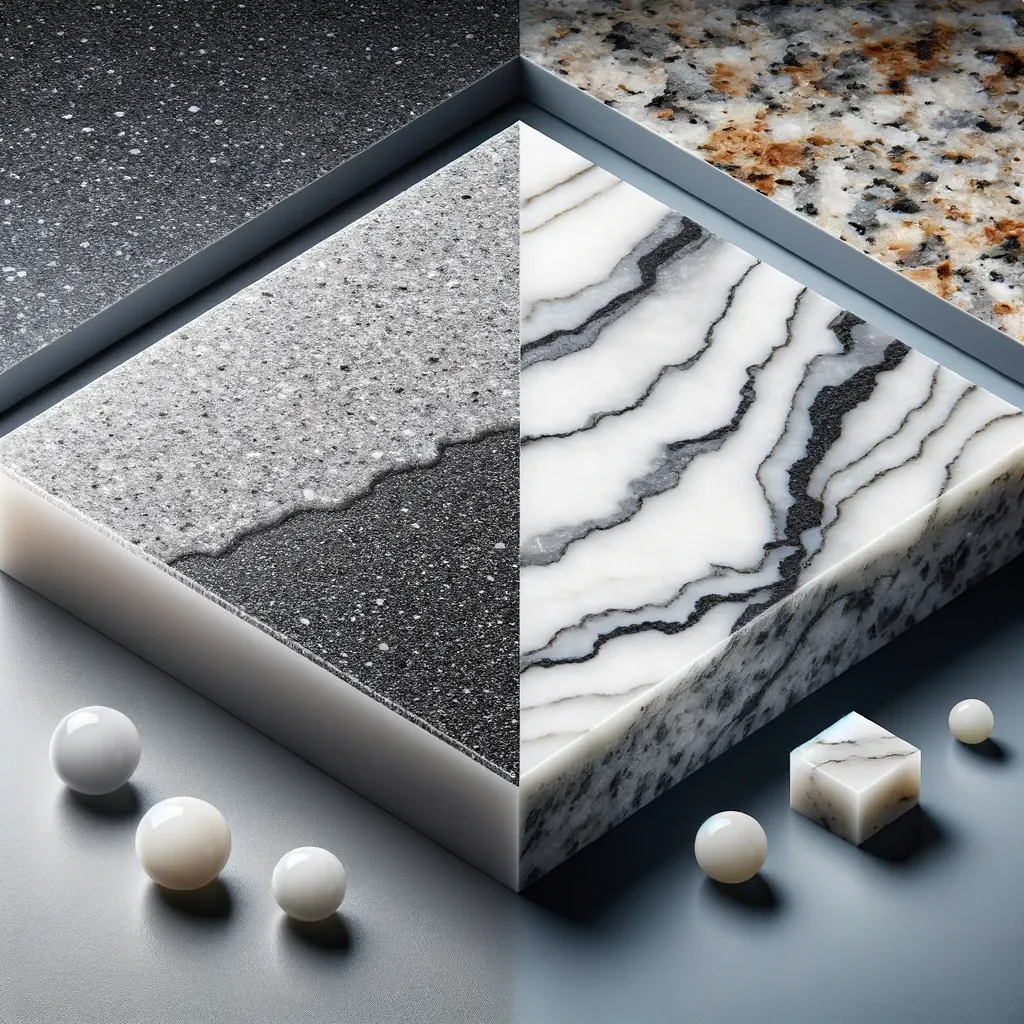
Which one looks better: Quartz or Granite?
In many cases, the look is the most important factor in deciding between quartz and granite.
Granite, for example, tends to provide a bolder worktop design due to its inherent properties.
Still, granite has options that can make it look better. Bookmatching is a procedure in which two slabs cut from the same block are linked together, resulting in a mirror image at the join, which can be a useful design aspect.
Quartz's man-made nature ensures a more universal polish. While there are technically more types available, depending on the store, quartz may be limited to popular neutral tones such as black, white, grey, and beige. In a slightly patterned quartz, the join will be quite subtle, but not fully invisible.
Which is better for outdoor use: Quartz or Granite?
While granite requires sealing, it is the perfect material for an outdoor worktop if you are seeking for outdoor kitchen ideas. This is because quartz may be more prone to fading from continuous UV exposure than granite.
However, if you like the idea of using quartz outside, you can buy quartz that has been specifically prepared for outdoor use.
Granite wins!
Summary
While granite is an excellent choice for kitchen worktops, quartz's stability, dependability, and availability make it an especially effective option for your kitchen. Unless you want a very specific look that can only be accomplished with granite or other natural stone, quartz is a low-maintenance option that is less likely to be damaged by daily use.
Quartz is also accessible straight from manufacturers without having to see the stone first, however granite may require you to find the ideal one for your project, as each is unique due to the natural processes involved in its development.