
Can you paint over granite kitchen worktops

This guide will explain cost-effective ways to renovate your kitchen without replacing granite countertops. It will instruct you on how to paint over granite kitchen worktops, including preparing the surface, selecting the proper paint, and the steps for painting over granite. Additionally, we will discuss how to maintain and protect the painted surface, along with providing information on alternative ways to renovate kitchen countertops.
Why Consider Painting Over Granite Kitchen Worktops?
Painting over granite kitchen worktops offers a cost-effective approach to remodelling a kitchen, providing transformative aesthetics and potentially raising property values. This unique renovation option combines the modern, sophisticated appearance of painted surfaces with the strength and durability of granite, resulting in a one-of-a-kind home design.
This innovative approach is more affordable than replacing granite surfaces and allows homeowners to tailor their kitchens to current design trends. Painting over granite enables worktops to seamlessly blend into a cohesive modern design, offering flexibility in colour choices. Homeowners can experiment with various colours and finishes to match their personal design preferences and enhance the visual appeal of their property.

Preparing the Granite Surface
Before painting granite kitchen worktops, the most crucial step is to prepare the surface correctly by cleaning the granite thoroughly and ensuring that it is free of any residues that could impact the paint’s adhesion.
Cleaning and Sanding the Surface
Cleaning and sanding are two crucial steps in preparing the granite surface before painting. It is important to use the right tools and protective equipment to ensure that the surface is free of dirt, grease, and other contaminants that could affect the final finish.
Cleaning can be accomplished by applying a mild detergent or a specially formulated granite cleaner to eliminate surface stains and dirt. Sanding is then vital to ensure that the surface is smooth and even, providing a better base for the paint to adhere to. Sanding can be performed using fine-grit sandpaper or a sanding block to gently roughen the surface in order to improve paint adhesion. It is recommended to wear protective gear such as goggles, gloves, and a mask to safeguard against inhaling dust and chemicals used during surface preparation.
Priming the Surface
Selecting the appropriate undercoat and carrying out the priming process correctly on the granite surface are crucial to ensure the paint adheres effectively and the finish remains durable. The undercoat chosen for the granite surface must be compatible with both the granite material and the paint that will be applied.
Priming the granite helps ensure proper adhesion of the paint to the underlying surface, preventing peeling or flaking over time. Factors such as the absorbency of the granite, whether it is polished or unpolished, and the environmental conditions it will be exposed to should be considered when selecting an undercoat.
It is essential to use an undercoat that is compatible with the paint for optimal adhesion, as specific paints may require specific undercoats. Always follow the manufacturer’s instructions for applying undercoat on painted granite surfaces.
Choosing the Right Paint for Granite
Selecting the appropriate paint for granite kitchen worktops is crucial for enhancing the aesthetics and ensuring long-term durability of the material. Key considerations include the intended use of the worktop, the desired finish, and the need for a sealant to safeguard the painted surface.
Types of Paint to Use
Choose paints specifically designed for painting granite surfaces, especially those formulated for materials commonly found in kitchen worktops. These coatings contain various resins and additives that enhance paint adhesion to granite, reducing the likelihood of peeling or chipping over time. Epoxy and urethane paints are excellent options for painting granite surfaces due to their high resistance to stains and wear. They are particularly beneficial for worktops as their stain resistance and durability help withstand abrasion. Acrylic-based paints are also recommended for their colour retention, ease of application, and cleaning. Selecting the appropriate paint not only enhances the aesthetic appeal of granite surfaces but also extends their longevity and shields them from everyday wear and tear.
Colour Options and Finishes
Using a variety of colour and finish options for the paint on granite worktops can enhance the design and style of the kitchen. Different colour selections can be used to achieve a specific aesthetic, while various finishes can be employed to achieve the desired look and texture of the paint.
It is crucial to choose a colour palette that complements the design style as it sets the overall mood for the kitchen. For a contemporary look, colours such as clean white, dark charcoal grey, or rich navy are recommended. Conversely, warm earthy tones like olive green or terracotta can create a welcoming ambience.
The finish serves as the final layer that gives the paint its distinct appearance, whether matte, glossy, or textured. Matte finishes are subtle and do not reflect much light, whereas glossy finishes reflect light and add an elegant touch to the kitchen.
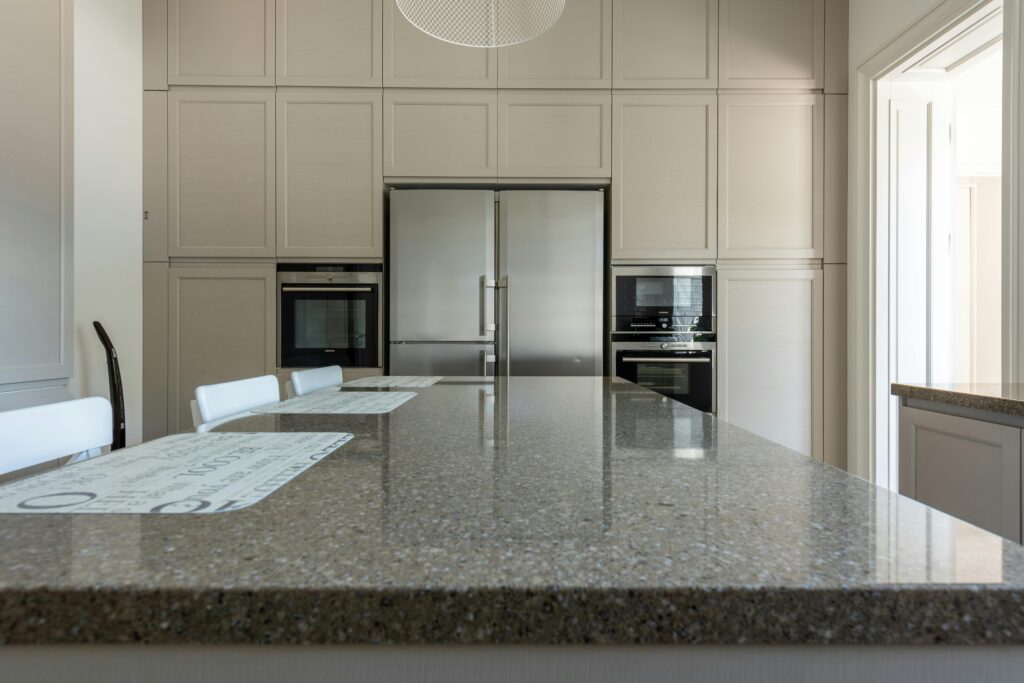
Steps for Painting Over Granite Kitchen Worktops
Painting over granite kitchen worktops is a process that demands a specific and precise set of steps. Whether you choose to tackle this task yourself or enlist the help of a professional, the technique and process are intricate and necessitate skilled labour to achieve the desired finish.
Step-by-Step Guide
For painting over granite kitchen worktops, a step-by-step guide includes material preparation, application technique, and selecting suitable tools and equipment. Each step of the project should be carried out meticulously to achieve a successful and long-lasting finish.
To begin, thoroughly clean the granite surface with a mild detergent to eliminate dirt, grease, or residue. Lightly sand the worktop with fine-grit sandpaper to create a rough surface for the paint to adhere to and to remove the polish or gloss from the old countertop paint, as the primer adheres better to a rough surface.
Next, choose a high-quality primer suitable for a stone surface and apply it with a brush or roller in a thin, even coat, ensuring complete coverage on all surfaces of the granite countertop. Once the primer has dried, select a high-quality, durable acrylic paint appropriate for use on countertops and apply it in thin, even coats with a brush or roller, allowing each coat to fully dry before applying the next.
Finally, apply a clear polyurethane topcoat to the painted surface once the paint has dried to enhance durability and provide additional protection.
Maintaining and Protecting the Painted Surface
Regular cleaning and proper sealing are the two most important maintenance procedures that can extend the lifespan of the painted finish on granite worktops, ensuring their long-term durability and aesthetic appeal.
Cleaning and Sealing the Painted Worktop
Proper cleaning and regular resealing of the painted worktop are essential for maintaining its finish and protecting it from daily damage. Using appropriate cleaning products and timely resealing is crucial to preserve the original durability of the surface.
When cleaning granite worktops, it is recommended by the Stone and Tile Care Guide to use soap and pH-neutral, soap-free cleaners to avoid damaging the painted surface. Always adhere to the manufacturer’s cleaning product instructions for effective cleaning and to prevent any harm.
After cleaning, ensure the worktop is dried thoroughly to prevent water stains. Proper sealing of the granite is vital to prevent water from seeping into the pores and cracks and causing damage. For sealing granite worktops, the Stone and Tile Care Guide suggests using a high-quality granite sealer. Before application, wear protective gloves and a mask to shield your hands and lungs from direct exposure to chemicals.
Additionally, after cleaning with soap, reapply the paint or clear coat as needed to maintain protection from daily wear and tear. Sealing granite worktops should be carried out not only during regular maintenance checks but also when signs of wear and damage are observed.
Alternatives to Painting Over Granite Kitchen Worktops
Painting over granite kitchen worktops offers a cost-effective alternative to other methods of enhancing the appearance of your kitchen, but it is not the sole option for restoring them. You can also opt to refinish, resurface, or replace the worktops with different materials to achieve a different aesthetic or level of upgrade.
Other Options for Updating Your Kitchen Worktops
Updating a kitchen worktop goes beyond simply painting it; design trends offer a fresh approach. Installing new work surfaces, utilising unique materials, and staying current with modern design trends are key factors that contribute to the popularity and trendiness of a kitchen worktop.
Quartz work surfaces have emerged as a preferred material due to their durability and low maintenance requirements. For a touch of luxury, homeowners often opt for marble work surfaces. Concrete work surfaces, known for their industrial aesthetic, have gained popularity for their durability, easy maintenance, and the contemporary feel they bring to kitchens.
Design elements such as waterfall edges and integrated sinks serve to modernize the look of kitchen worktops. Additionally, bold color choices and the use of contrasting materials can add a unique stylistic and personal flair to the overall design.
Frequently Asked Questions
Can you paint over granite kitchen worktops?
Yes, it is possible to paint over granite kitchen worktops with the right materials and techniques.
What type of paint can be used on granite kitchen worktops?
Acrylic or oil-based paints are recommended for painting over granite kitchen worktops.
Do I need to prep the granite surface before painting?
Yes, it is important to thoroughly clean and sand the granite surface before painting to ensure proper adhesion of the paint.
Will the paint adhere to the granite surface permanently?
The paint will adhere to the granite surface as long as it is properly prepped and the right type of paint is used. However, it may require touch-ups or reapplication over time.
Are there any special considerations when painting over granite kitchen worktops?
It is important to use a high-quality primer and sealer specifically designed for painting on granite surfaces. Also, avoid using abrasive cleaners on the painted surface to prevent damage.
Can I change the colour of my granite kitchen worktops by painting over them?
Yes, painting over granite kitchen worktops is a cost-effective way to change the colour and appearance of your kitchen without having to replace the entire worktop.