
Why does my granite always look dirty

This article will offer information on the most common causes of granite staining, encompassing both natural and incorrect cleaning causes. It will also provide the best methods to prevent and remove stains, as well as maintain the shine of granite through proper cleaning and sealing practices. Additionally, the article will include advice on when to seek professional help upon noticing signs of damage.

Causes of Dirty-Looking Granite
Improper cleaning, exposure to natural elements, and a lack of ongoing maintenance are the causes of dirty-looking granite. Stains, residue, and grime penetrate the surface of granite, gradually making it appear worn and dirty. Exposure to water, oil, and acidic substances results in stains and discoloration on granite. Unsealed granite is more susceptible to staining, making cleaning more challenging.
To maintain the integrity of granite, it is important to use proper cleaning techniques, such as pH-neutral granite cleaners and avoiding harsh chemicals. Regular wiping with a soft cloth and mild soap helps eliminate residue. Stains from water, oil, and acidic substances should be promptly cleaned using a paste made from water and bicarbonate of soda or a specialised granite cleaner.
Natural Factors
Exposure to spills and natural sources of dirt, including bacteria and mould, can cause granite surfaces to appear dirty due to the porous nature of granite that can lead to staining and discolouration. Proper cleaning is necessary to restore a clean appearance and maintain the cleanliness and hygiene of kitchen worktops and other granite surfaces.
It is important to clean up spills immediately to prevent stains, using a soft cloth or sponge. A regular cleaning schedule with a mild soap or a cleaner specifically designed for granite can remove bacteria and prevent mould growth. Dirt should be gently scrubbed off to avoid scratching the surface. By consistently following these cleaning practices, you can maintain the appearance and increase the lifespan of your granite surfaces.
Improper Cleaning Techniques
To avoid streaks, residue, and loss of shine on granite surfaces, it is important to use proper cleaning techniques. Harsh cleaning products, aggressive scrubbing, and acidic substances like vinegar should be avoided. Instead, opt for milder cleansers such as mild soap or specialised granite cleaners to prevent potential damage that can arise from harsh chemicals.
Without proper care, granite may deteriorate over time, accruing stains, losing its shine, and developing streaks. Utilising non-abrasive cleaning tools like soft cloths or sponges can effectively clean the surface without causing scratches. Regular cleaning with a pH-neutral, non-acidic solution is essential to maintain the longevity and aesthetics of your granite countertops or surfaces.

Preventing and Removing Stains
The best way to prevent and remove stains from granite surfaces is by implementing proper care and maintenance methods, such as sealing the surface, regular cleaning, and immediate wiping of spills. Proper maintenance can help prevent discolouration and preserve the freshness of the surface.
Sealing granite is crucial for protecting its porous nature from absorbing liquids that can lead to stains. Regularly applying a sealant creates a barrier that prevents spills from penetrating and reduces the likelihood of stubborn stains. Routine cleaning with a mild, pH-neutral cleaner is essential for maintaining the stone’s aesthetic appearance.
Promptly wiping spills, particularly acidic liquids like citrus juices and red wine, can prevent them from seeping in and causing discolouration or etching on the surface. Proper maintenance also involves treating the grout lines to prevent mould and dirt build-up.
Effective Cleaning Products
To maintain the shine and cleanliness of granite surfaces, it is essential to use the best cleaning products that can effectively remove water spots, streaks, and grime. Selecting the appropriate sealant and polish is crucial for ensuring long-term maintenance.
According to insights from the renowned insulation and building solutions company, Knauf, it is recommended to use non-abrasive cleaners specifically designed for stone when cleaning granite surfaces. Harsher chemicals can harm the natural beauty of granite, as it is a natural material sensitive to certain cleaners.
To prevent etching, discoloration, or other damage, it is important to opt for pH-neutral cleaners. Regularly sealing granite surfaces is essential to safeguard against stains and spills, following the manufacturer’s guidelines on the frequency of sealing.
For daily cleaning of granite countertops and floors, a solution of mild dish soap diluted in warm water is suitable. Avoid using harsh chemicals like bleach and ammonia, as they can cause surface damage and compromise the integrity of the granite.
Preventive Measures
To maintain the shine and longevity of granite, the best approach is to implement preventative measures such as resealing, using effective cleaning solutions, and applying surface treatments, along with proper maintenance and care. The Marble Institute of America advises that regular resealing is key to preserving granite countertops and surfaces. The frequency of resealing may vary based on the type of granite and level of usage, but the Marble Institute suggests resealing granite at least once every one to two years. Resealing creates a protective barrier that prevents stains and moisture penetration. Daily cleaning with a mild soap and water solution, along with periodic deep cleaning using a pH-neutral stone cleaning product, is recommended to prevent dirt, spills, and stains from becoming ingrained. Monthly deep cleaning with a pH-neutral stone cleaner can effectively eliminate stubborn dirt and stains.
It is important to use coasters under drinking glasses, especially those with acidic substances, and trivets under hot pans to avoid water rings and burns. To prolong the life of granite surfaces, refrain from using acidic or harsh cleaning products.
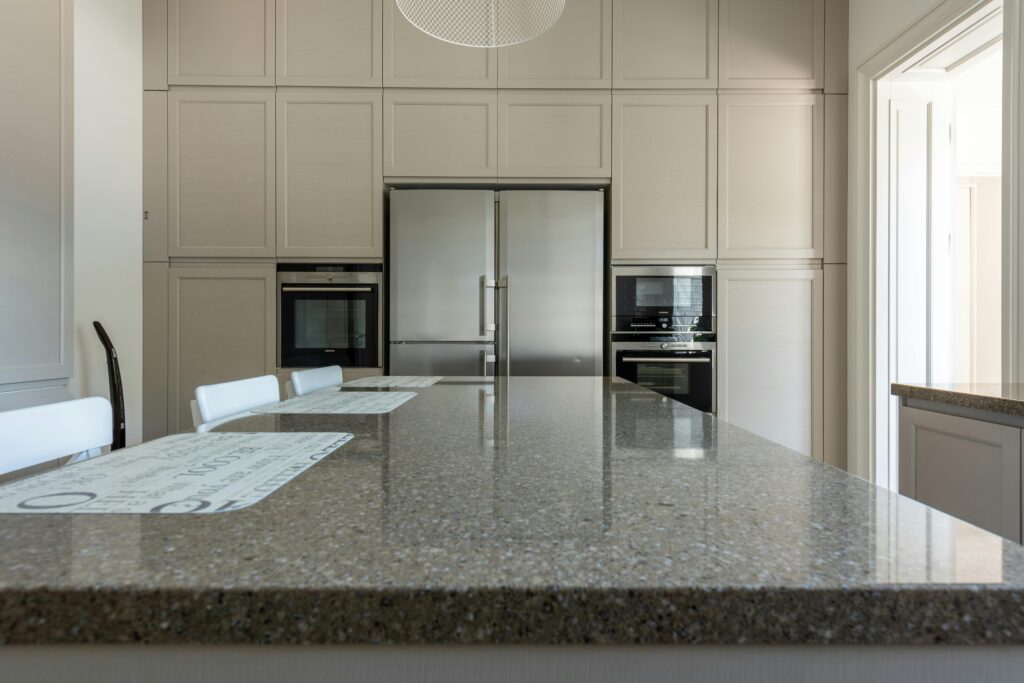
Maintaining the Shine of Granite
Maintaining the shine of granite involves regular cleaning with high-quality sealers and frequent polishing to restore the stone’s glossy appearance. It is important to adequately and regularly clean granite to preserve its beauty and durability.
Surface treatments such as buffing or honing can help to revitalise the shine of worn and dull granite over time. Regular cleaning with specially formulated granite cleaners is essential to prevent the accumulation of grime that can diminish its lustre.
Using a granite-safe cleaner regularly can also prevent stains that may result in permanent damage. To avoid harming the sealant on granite surfaces, it is crucial to use mild cleaning agents and promptly wipe up any stains.
Establishing a cleaning schedule is the most effective method for maintaining the shine of granite worktops and floors.
Proper Cleaning and Polishing Techniques
To preserve the shiny surface of granite, cleaning and polishing should be done using the appropriate products and materials. Microfiber cloths and other gentle cloths are ideal for removing grime and restoring the stone’s shine. These materials can be used regularly as they are soft and effective in washing away dirt without causing damage to the stone.
When cleaning granite, avoid harsh chemicals or abrasive cleaners that can harm the surface. Instead, opt for pH-balanced cleaners specifically designed for natural stone. Regular polishing with granite-safe polishes helps in maintaining the shine and protecting the surface from stains.
By following these care steps, your granite countertops or floors will maintain their lustre and gloss for many years to come.
Sealing Granite for Long-Term Protection
To ensure long-term protection against staining, discolouration, and etching of the surface, it is important to seal granite. Regular resealing helps maintain the shine and durability of the granite. Sealants form a protective barrier that blocks out moisture, oil, and other substances that could cause stains. Using high-quality sealants can significantly prolong the lifespan of granite countertops or floors. Consistent resealing helps preserve the stone’s shiny appearance and prevents accidental spills or stains from penetrating deep into the porous surface, thus avoiding discolouration.
When to Seek Professional Help
Recognising the signs of damage or persistent cleaning challenges and knowing when to seek professional help for granite cleaning is crucial. Professionals can offer effective solutions and maintenance tips for proper care and home improvement. Understanding the indicators that signal the need for professional assistance in granite cleaning is vital for preserving the longevity and appearance of your surfaces.
Whether dealing with stubborn stains that are hard to remove or dull spots that detract from the beauty of your granite, seeking expert help can make a significant difference. Knowing when it’s time to enlist professionals specialising in the cleaning and maintenance of granite ensures that your surfaces remain in top condition and receive the care they deserve.
Signs of Damage and When to Call a Professional
Damage such as etching, staining, or discolouration of granite surfaces is visible to the eye and cannot be avoided without professional cleaning and care. Regular sealing and cleaning are important for maintaining the durability and safety of kitchen surfaces. Strict adherence to a schedule for granite sealant applications helps to create a protective layer that prevents damage from moisture, stains, and bacteria. Proper granite cleaning practices, such as using non-abrasive cleaners and not allowing acidic substances to sit on the granite for long periods of time, can extend the life of your granite countertops. Including these practices as part of your regular routine reduces the possibility of damage and ensures that your kitchen remains beautiful for many years.
Frequently Asked Questions
Why does my granite always look dirty?
There could be several reasons why your granite looks dirty, such as improper cleaning methods, hard water stains, or sealant issues.
How can I clean my granite to make it look less dirty?
First, make sure you are using a granite cleaner specifically designed for natural stone. Avoid using harsh chemicals or abrasive sponges as they can damage the surface. Instead, use a soft cloth or sponge and gently wipe the surface in a circular motion. Rinse with water and dry with a clean cloth.
What are some common mistakes people make when cleaning granite?
One common mistake is using vinegar or lemon juice to clean granite. These acidic substances can actually damage the sealant and etch the surface. Another mistake is using abrasive cleaners or scrubbing too hard, which can cause scratches on the surface.
How do I remove hard water stains from my granite?
Hard water stains can leave a cloudy or dull appearance on granite. To remove these stains, mix equal parts water and rubbing alcohol and apply it to the stained area. Let it sit for a few minutes before wiping it off. You may need to repeat this process a few times for stubborn stains.
Why is my granite still dirty even after cleaning?
If your granite still looks dirty after cleaning, it could be due to a problem with the sealant. Over time, the sealant on your granite can wear off and make it more susceptible to stains and dirt. You may need to reseal your granite to keep it looking clean and shiny.
Can I prevent my granite from looking dirty?
Yes, there are a few steps you can take to prevent your granite from looking dirty. First, make sure to clean up spills immediately to prevent them from staining the surface. Also, regularly seal your granite to protect it from stains. Lastly, avoid using harsh chemicals or abrasive tools when cleaning to avoid damaging the surface.